Territory & Environment
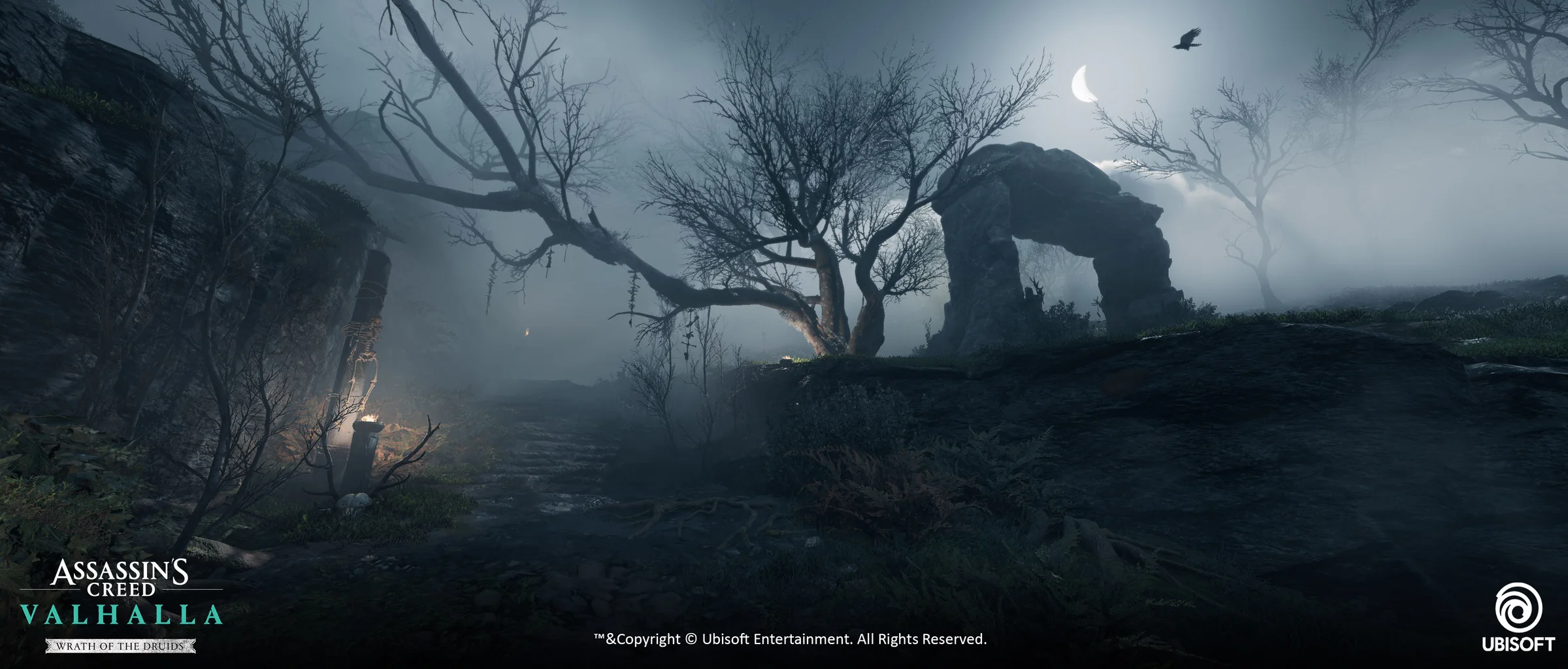
Overall identity, environmental contrast, biome hierarchy, landmarks, regional differentiation, composition and player-facing visual readability.
Case study · AAA Art Direction
Full visual leadership of the expansion at Ubisoft Bordeaux, setting the visual framework, aligning Content and Narrative Direction with discipline leads around a shared target, stepping into focused artist reviews when fine tuning was needed, and carrying the direction through final implementation and the worldwide marketing key art developed with Ubisoft Montreal.
The mandate
My responsibility was not limited to environment supervision or final visual approval. I owned the artistic direction of the expansion as a whole: defining the identity of Ireland, translating that identity into executable direction for each department, and protecting the direction through final delivery. A large part of that work was collaborative: I worked closely with the Content Director and Narrative Director on world-building and on the visual development of main and secondary narrative characters, aligned discipline leads around a common visual target, resolved cross-discipline decisions with production and technical direction, and stepped into direct artist reviews when fine tuning was needed.
The central challenge was to create a territory that felt immediately new and memorable while remaining fully credible inside Assassin’s Creed Valhalla. Every discipline had to contribute to the same world: landscape, architecture, materials, characters, lighting, atmosphere, VFX, technical solutions and marketing representation.
Internal art-direction decks, benchmarks, review packs, production notes, paintovers and iteration documents remain confidential and are not displayed. This page describes their function, the leadership process and the public result without reproducing proprietary material.
Art-direction scope
I converted the creative ambition into a shared visual system, then worked with the Content Director, Narrative Director and discipline leads to translate that direction into clear decisions for the world, characters and each art department.
Overall identity, environmental contrast, biome hierarchy, landmarks, regional differentiation, composition and player-facing visual readability.
Historical coherence, settlement language, structural families, material contrast, surface vocabulary and consistency between buildings and landscape.
Visual development of main and secondary narrative characters, faction identity, silhouette, cultural readability and alignment between narrative intent, world-building and final design, in close collaboration with Content and Narrative Direction.
Mood, time-of-day identity, visual focus, weather, ritual atmosphere, supernatural restraint and clarity during gameplay and cinematics.
Artistic intent translated into playable locations, terrain structure, asset reuse, technical constraints, performance considerations and scalable solutions.
Department-specific direction packs, references, benchmarks, paintovers, comparisons, briefs and daily review material used to turn intent into actionable decisions.
Leadership & core partnerships
My role was to set the visual target, keep every discipline aligned, and make the cross-department decisions that protected the identity of the expansion. Day-to-day execution was carried by discipline leads and their teams, while I worked continuously with the Content Director, Narrative Director, production and technical direction to align world-building, narrative characters, priorities, milestones and cross-discipline decisions. I stepped directly into artist reviews when a specific visual issue needed fine tuning. Philippe Trarieux “Bob” was my daily technical partner, helping translate the artistic direction into robust in-engine implementation.
Public shipped work
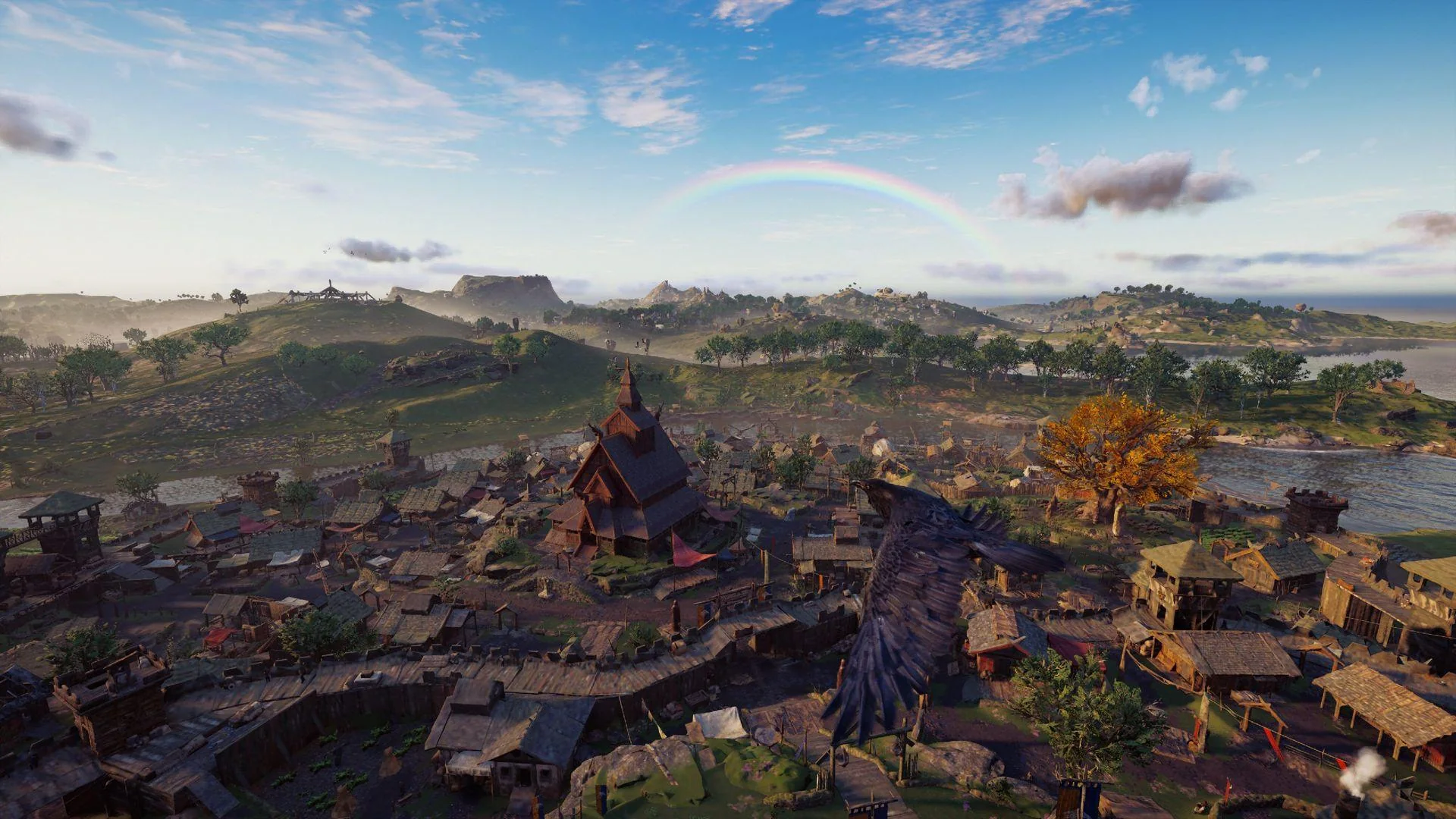
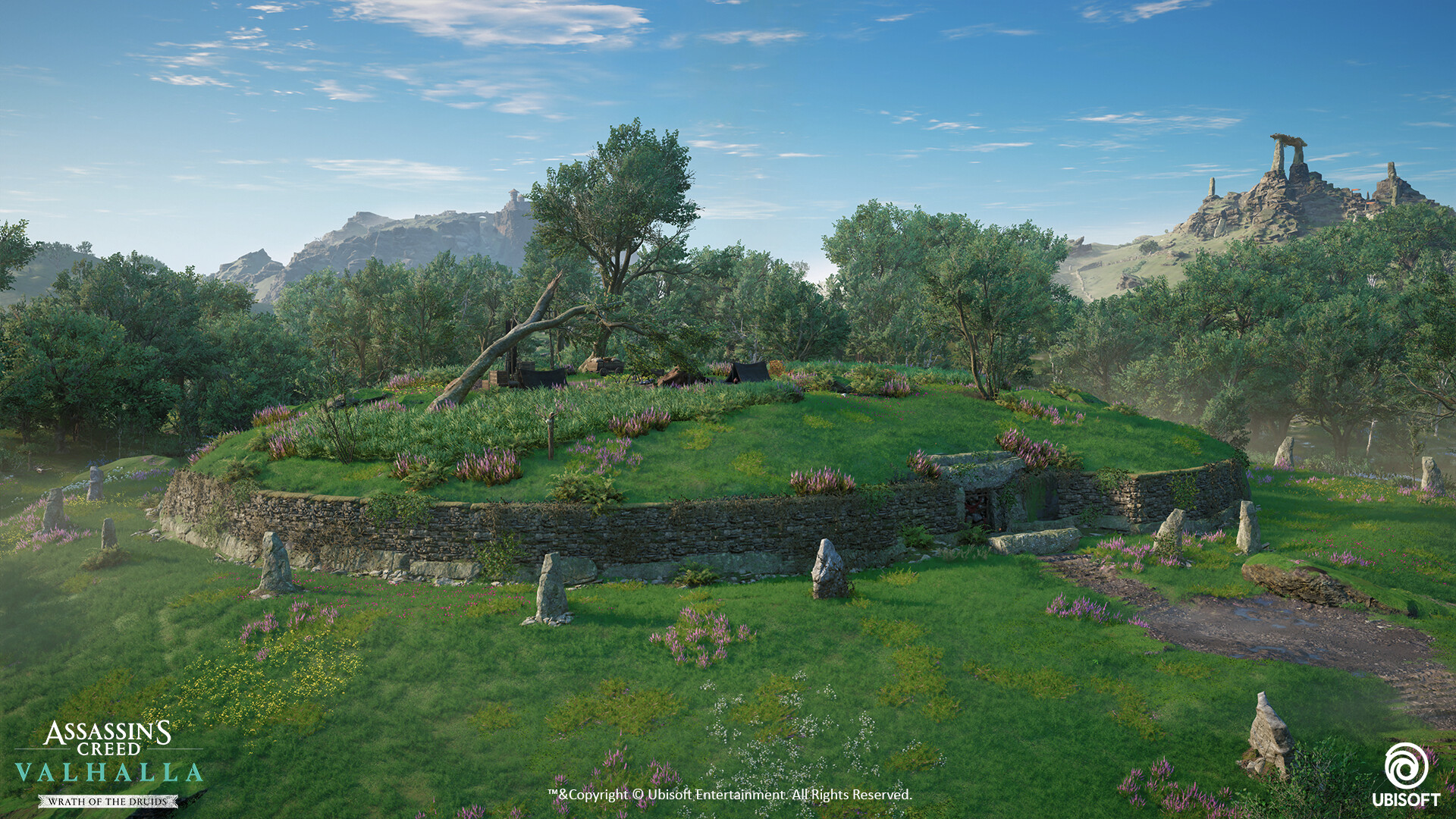
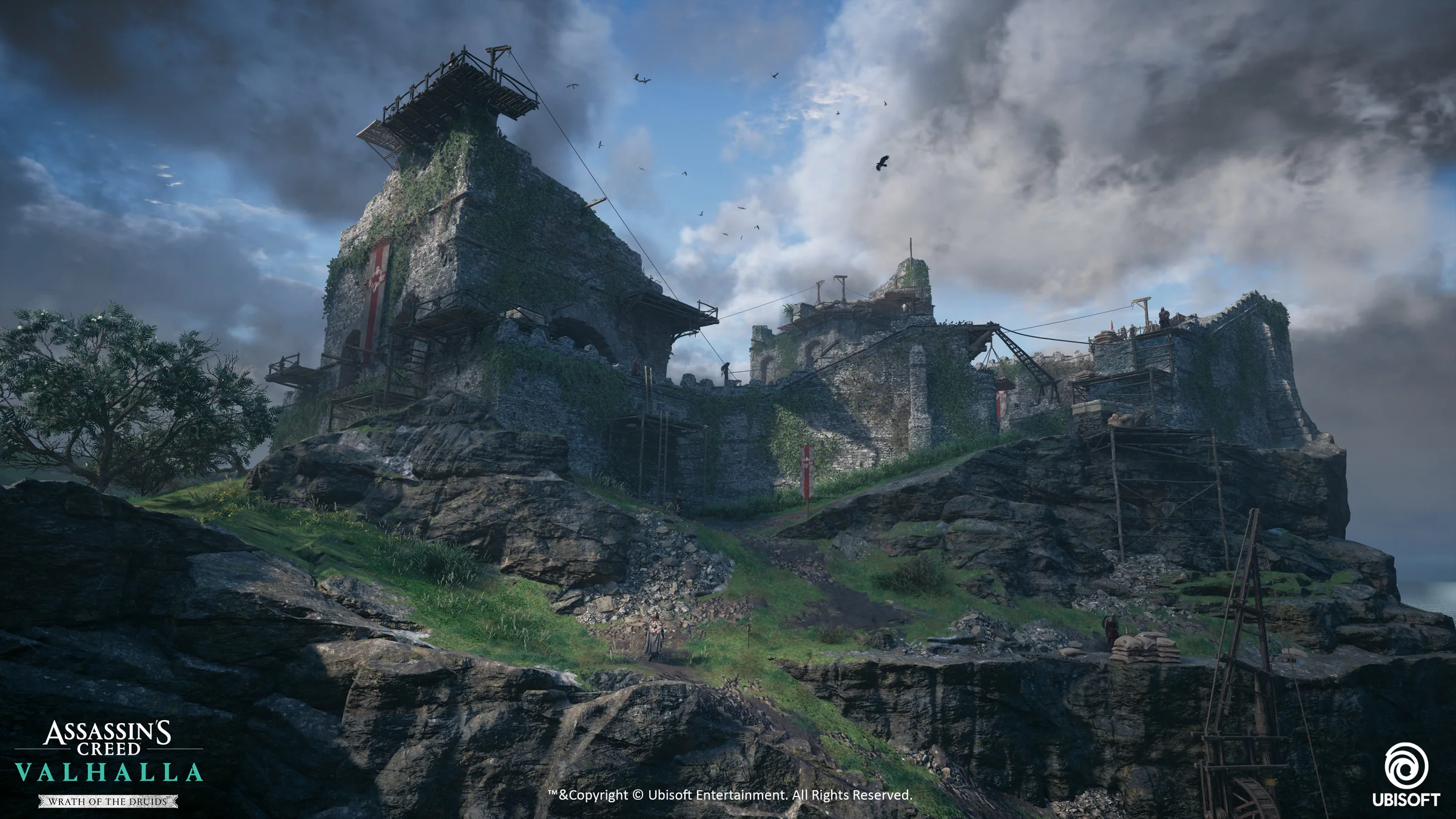
These public images demonstrate different parts of the finished visual identity. They are team-produced work shown here as evidence of the direction, not as claims of individual asset authorship.
Marketing Art Direction
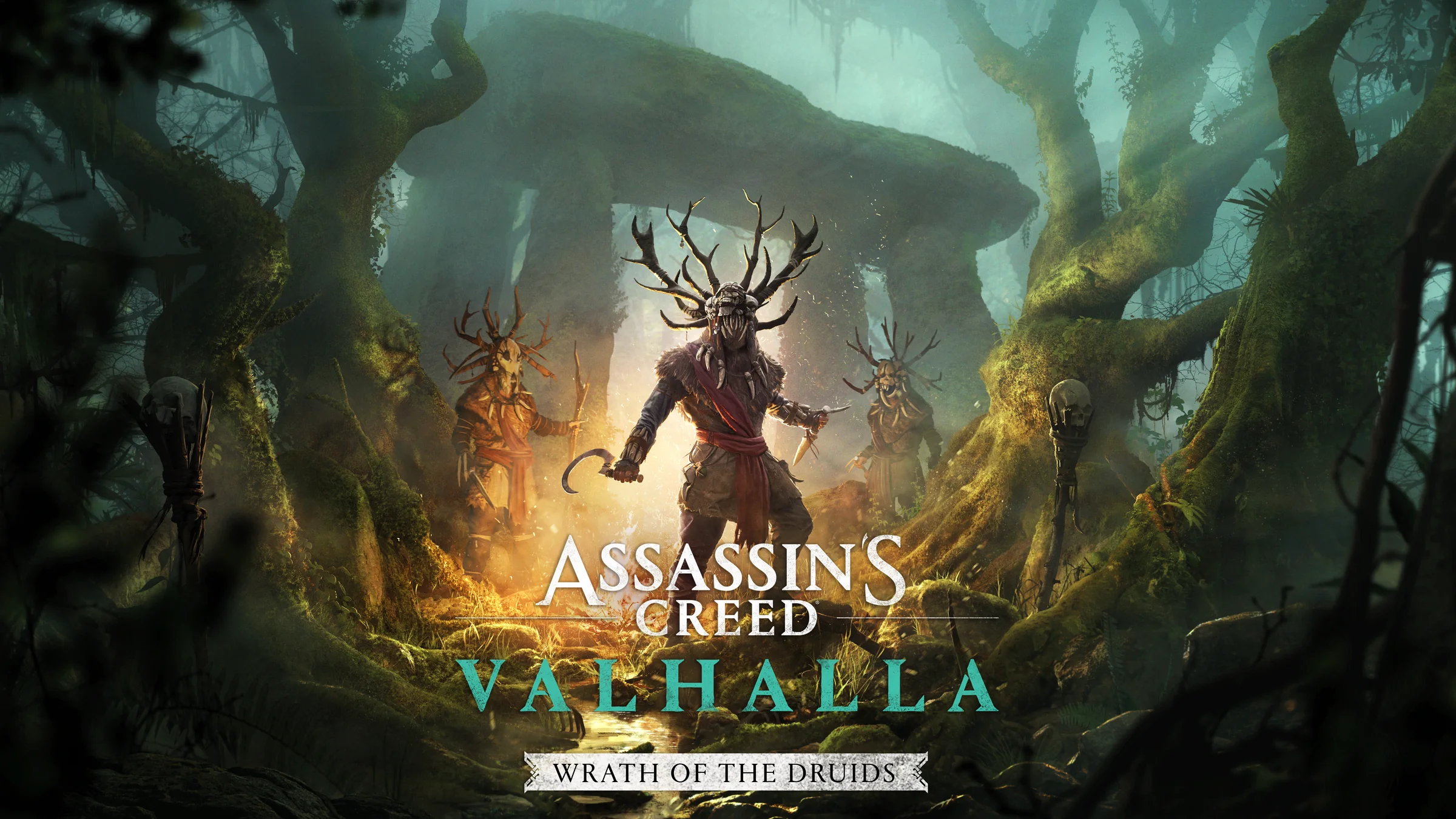
I completely directed the final marketing visuals in direct collaboration with the Ubisoft Montreal team. My role was to ensure that the campaign did not become a generic fantasy image, but remained a concentrated, immediately readable expression of the expansion’s actual visual identity.
I guided the composition, character staging, environment, monumentality, atmosphere, lighting, narrative clarity, visual hierarchy and the controlled suggestion of the supernatural. I then supervised the adaptation of the final composition across landscape, square and vertical formats.
Project credits
Final assets were created collaboratively. The credits below distinguish overall art direction, the contributing art disciplines and artists, and the core production and technical partnerships.
David Pellet
Olivier Fleurette
Alexandre Lutz
Arnaud Kleindienst, Lucas Leger, Quentin Gillet
Corentin Marquet, Nicolas Gorszczyk, Natanael Millet, Raphael Thiessard, Anthony Lemetayer, Jerome Rajcek, Quentin Donnaint, Cristel Mrowka
Laurent Harduin, Ines Helmer
Joao Pereira Lemos Costa, Gery Arduino
Robert Farrand
Hugo Marouzé, Anaïs Riff
Ludovic Petiot
Eric Moreno
Loïc Sprimont, Arthur Gatineau, Romain Truchard, Mike-Amir El Frangi, Jason De Loos, Ye Wen Xiang
Thomas Vialetto
Philippe Trarieux “Bob”, David Pellet’s daily technical partner for in-engine implementation of the art direction.
Olivia Forni, Nicolas Freeman
Ubisoft Montreal team, final key-art production under David Pellet’s direct visual supervision.